Coffee Table Styling Ideas: A Beginner's Guide to Building a Balanced Vignette
By Ingrid Halvorsen, Home Planning Specialist · November 16, 2026
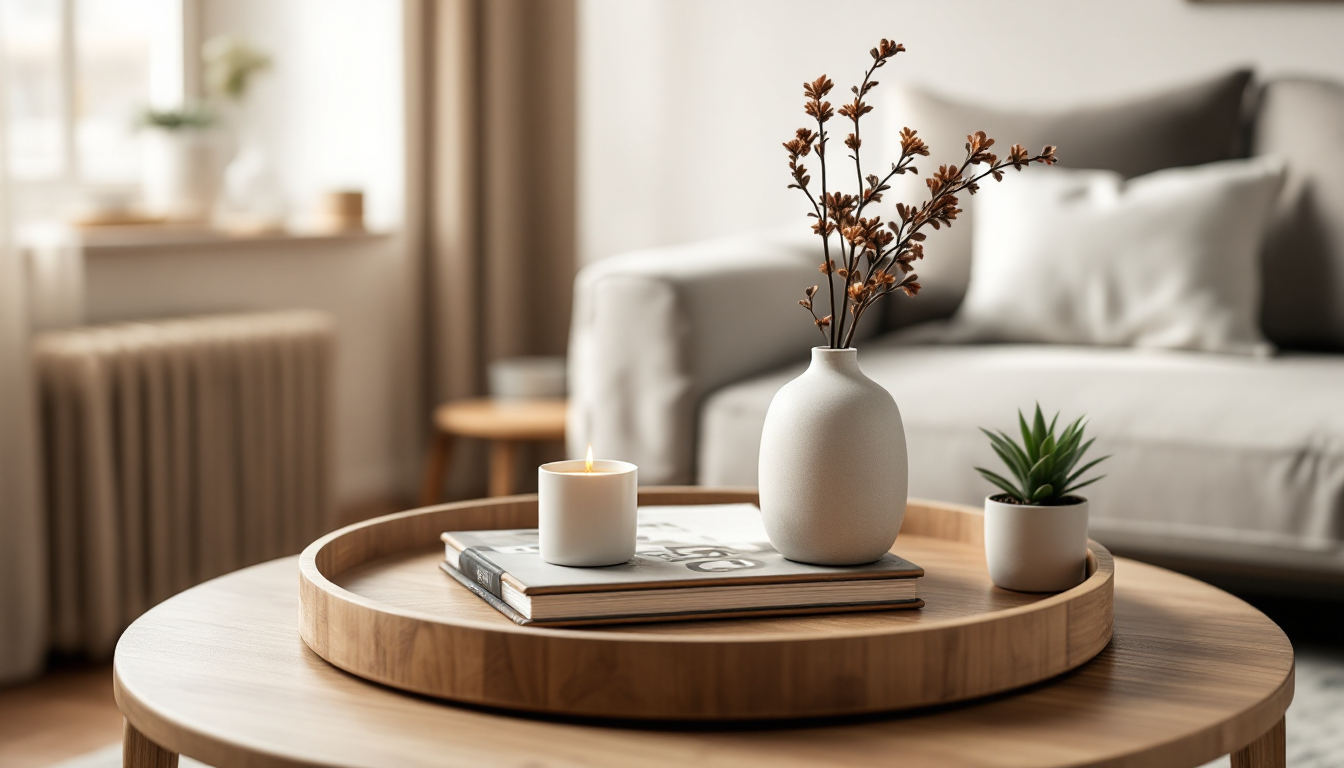
Why a Coffee Table Deserves Real Planning
The coffee table sits at the center of almost every living room, yet it's often the last thing anyone thinks about. You arrange the sofa, pick a rug, hang some art — and then plop down whatever's on hand: a remote, a candle, maybe last week's mail. The result rarely feels intentional, even if the rest of the room looks great.
Styling a coffee table well is a small skill with outsized impact. It's one of the fastest ways to make a living room layout feel finished, because it sits at eye level when you're seated and anchors the negative space between your seating pieces. This guide breaks the process into a few repeatable rules so you can style any table, in any room, without second-guessing yourself.
Start With the Table's Shape and Size, Not the Objects
Before you touch a single tray or book, look at the table itself. Its shape and size dictate how many "zones" you can realistically style.
- Round or oval tables work best with a single centered grouping or two small clusters set at angles, since there are no hard corners to anchor objects.
- Rectangular tables have more surface to divide — typically into two or three loose zones, usually asymmetrical rather than mirrored.
- Small or nesting tables only have room for one idea at a time. Resist the urge to crowd them; one tray or one plant is often enough.
If you're still finalizing furniture placement, it helps to think about the table in relation to the whole room before committing to a size. Tools that let you see furniture in your room with AR can save you from buying a table that's too large or too small for the space you're trying to balance.
The Core Formula: Height, Texture, and Negative Space
Almost every well-styled coffee table follows the same underlying structure, even if the objects differ. Think of it as three ingredients working together.
1. Vary the Height
Flat objects spread across a table look scattered. Instead, build in at least three height levels: a tall anchor (a vase, a stack of books, a small sculpture), a mid-height piece (a candle, a small plant), and something low and flat (a tray, a coaster, an open book). The eye naturally reads variation as "designed" rather than "left there."
2. Mix Textures and Materials
A table full of matte ceramic feels flat; a table full of shiny metal feels cold. Combine at least two contrasting textures — glass with wood, matte stone with a woven tray, a glossy ceramic vase next to a linen-bound book. This is the same principle that makes a warm minimalist room feel inviting instead of sterile: texture does the work that color would otherwise have to do.
3. Leave Negative Space
The most common beginner mistake is filling every inch of the surface. A coffee table should feel like it has room to breathe — and room to actually hold a coffee cup. Aim to leave roughly a third of the surface empty, especially on tables that double as a place to put drinks or set down a laptop.
A Simple Step-by-Step Styling Method
- Clear the table completely. Start from zero so you're not just rearranging clutter.
- Place the anchor piece first. This is usually a tray, since it defines a zone and keeps smaller objects from looking loose. Set it off-center, not dead-middle.
- Add a tall element inside or beside the tray — a vase with a single stem, a small lamp, or a sculptural object.
- Add a stack of two or three books on the opposite side of the table for visual weight and balance.
- Top the books with one small object, like a candle or a small dish, to tie the stack back into the rest of the arrangement.
- Add one organic element — a plant, a bowl of citrus, or dried branches — to keep the vignette from feeling too stiff or showroom-like.
- Step back and remove one thing. Nearly every styled table improves when you take away the final object you added.
Matching the Table to the Room's Color Story
Coffee table styling isn't separate from your room's broader palette — it's where that palette gets its finest detail. If you haven't settled on your wall and textile colors yet, it's worth working through how to choose a color palette for a room first, since the objects on your table should echo two or three of those tones rather than introduce entirely new ones.
A good rule: pick one accent color from your rug or cushions and repeat it in a single small object on the table — a candle, a book cover, a ceramic dish. That repetition is subtle, but it's what makes a room feel pulled together rather than assembled piece by piece.
Common Mistakes to Avoid
- Matching sets. Identical candles or a matched coaster set reads as "staged," not styled. Mix finishes and shapes instead.
- Ignoring function. If the table is used daily for drinks, remotes, or homework, style around a clear landing zone rather than filling the whole surface.
- Overscaling. Oversized vases or stacks on a small table will tip the proportions; keep objects under about a third of the table's height.
- Styling in isolation. Always check the table against the sofa, rug, and surrounding furniture before calling it finished — if you're still mapping the whole room digitally, planning tools on home3dplan.com can help you test layouts before buying anything.
Final Thought
Coffee table styling is less about decorating talent and more about following a sequence: anchor, height, texture, negative space, repeat. Once the pattern clicks, you can restyle a table in minutes — for the season, for a party, or just because the remote finally needs a home that isn't the middle of the table.