7 Retaining Wall Ideas for a Sloped Backyard, Compared: Materials, Cost, and DIY Difficulty
By Marta Nowak, Landscape & Outdoor Designer · October 4, 2026
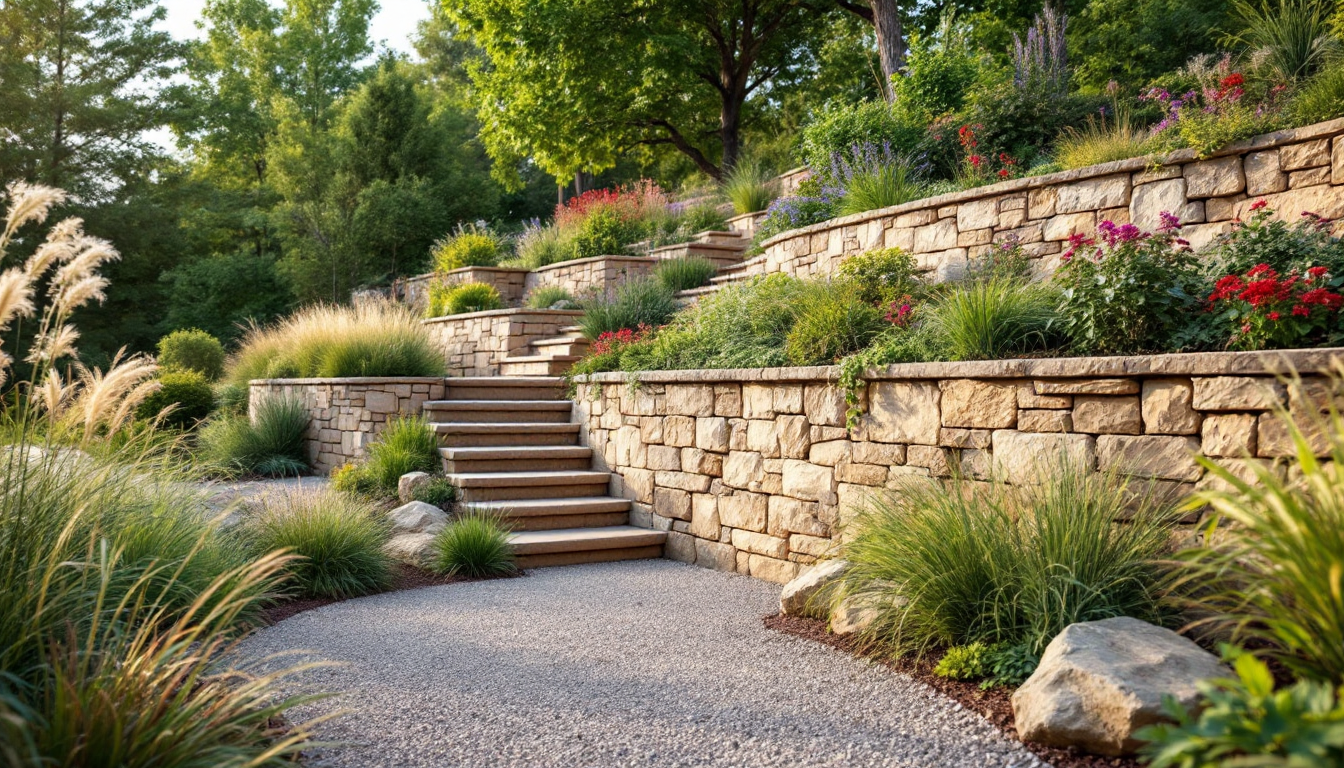
Choosing the Right Wall for Your Slope
A sloped backyard presents a choice, not just a problem: level it with terraces, hold it back with a single wall, or work with the grade using berms and plantings. If you've already read a primer on the basics of taming a sloped yard with retaining walls, this guide goes further — it lines up seven concrete options side by side so you can weigh cost, labor, and longevity before committing a weekend or a contractor's deposit to the project.
Every slope is different, and soil type, drainage, and wall height all affect which option makes sense. Walls over roughly 3-4 feet typically need engineering review and permits regardless of material, so factor that into any comparison below.
1. Segmental Concrete Block (SRW)
Interlocking segmental retaining wall units are the default choice for a reason: they're modular, require no mortar, and many systems include built-in setback for stability on slopes.
- Cost: Moderate — roughly $20-45 per square face foot installed.
- DIY difficulty: Medium. Doable for walls under 3 feet with a solid base course.
- Best for: Straight or curved runs, uniform grade changes, homeowners who want a clean, manufactured look.
2. Natural Stone (Dry-Stacked or Mortared)
Dry-stacked fieldstone or mortared ashlar walls bring a timeless, organic texture that suits rural and wooded lots especially well.
- Cost: High — stone and skilled labor push this toward $40-70+ per square foot.
- DIY difficulty: Hard for mortared work; moderate for dry-stack if you're patient and have access to flat stone.
- Best for: Properties where a natural, non-manufactured aesthetic matters more than budget.
3. Pressure-Treated Timber
Timber walls are the budget-friendly, weekend-project option, built from landscape timbers or 6x6 posts and lag bolts.
- Cost: Low — often $15-25 per square foot in materials.
- DIY difficulty: Easy to medium.
- Best for: Short-term solutions, raised beds, or walls under 3 feet where a rustic look fits the landscape.
- Trade-off: Lifespan is shorter than masonry — typically 15-20 years before rot sets in, even with treated lumber.
4. Poured Concrete
A formed and poured concrete wall is the heavy-duty option — essentially a cast-in-place structural element rather than a stacked system.
- Cost: High — formwork, rebar, and pump trucks add up, often $25-50+ per square foot.
- DIY difficulty: Very hard; this is a job for a contractor or structural engineer on anything beyond a low garden edge.
- Best for: Tall walls, steep slopes, or situations needing maximum structural capacity in a small footprint.
5. Gabion Baskets
Wire cages filled with stone have moved from highway engineering into residential landscaping, and for good reason — they drain almost perfectly and tolerate ground movement better than rigid walls.
- Cost: Moderate — cages are inexpensive, but fill stone and delivery can add up depending on local sourcing.
- DIY difficulty: Medium; assembly is simple but filling is labor-intensive.
- Best for: Contemporary or industrial-style gardens, sites with drainage challenges, and sloped lots where flexibility matters more than a polished finish.
6. Terraced Timber or Block Steps
Rather than one tall wall, a series of shorter terraced walls breaks a steep slope into usable planting shelves or seating levels — often the safer and more attractive approach for grades over 20%.
- Cost: Moderate to high, since you're building multiple shorter walls instead of one.
- DIY difficulty: Medium per tier, but cumulative labor adds up across a full slope.
- Best for: Yards where you want usable flat space at each level — raised beds, a paver patio tucked into a mid-slope terrace, or a lawn strip between planting beds.
7. Living (Vegetated) Walls with Erosion Mats
For gentle slopes, sometimes the answer isn't a hard wall at all. Erosion control fabric combined with deep-rooted groundcover, ornamental grasses, or a shaped berm can hold soil without any masonry.
- Cost: Low — plants and fabric are inexpensive compared to any built wall.
- DIY difficulty: Easy, though it takes a season or two for root systems to fully stabilize the slope.
- Best for: Slopes under roughly 15%, naturalistic gardens, and homeowners who want the softest possible transition between levels.
Quick Comparison at a Glance
- Tightest budget: living walls, then timber.
- Longest lifespan: poured concrete and natural stone.
- Best drainage performance: gabions.
- Most DIY-friendly: timber and living walls.
- Best for steep grades: terracing or poured concrete with engineering input.
Matching the Wall to the Rest of the Yard
A retaining wall rarely stands alone — it's usually part of a bigger reshaping of the backyard that might include a patio, steps, or raised beds. Before finalizing material, sketch how the wall ties into adjacent hardscape; many homeowners pair a terraced wall with a nearby paver patio planned for a first outdoor living space, which benefits from the same base-prep and drainage principles as the wall itself. If you're mapping the whole project digitally before breaking ground, tools for visualizing grade changes and hardscape layouts at home3dplan.com can help you test a few of these options against your actual lot dimensions before you order material.
Whichever option you choose, get the drainage right — a perforated pipe behind the wall and free-draining backfill matter more to long-term success than the facing material itself.