Landscaping Mistakes to Avoid: A Beginner's Guide to Planning Before You Plant
By Marta Nowak, Landscape & Outdoor Designer · September 5, 2026
Why So Many Yards Start Wrong
Most landscaping regrets don't come from a bad plant choice or a crooked path. They come from skipping the planning stage entirely. A new homeowner sees an empty yard, gets excited, and starts digging beds or ordering shrubs before thinking through how the space will actually be used. The result is a yard that looks fine in photos but frustrates everyone who tries to live in it — no shade where you eat, a soggy corner every spring, or a patio too small for a real table.
This guide walks through the most common beginner mistakes, in the order they usually happen, so you can catch them before they cost you a season of regrowth or a rebuilt retaining wall. If you haven't mapped out your yard at all yet, it's worth reading a full beginner's guide to landscaping a backyard first, since many of these mistakes trace back to skipping that initial planning step.
Mistake #1: Designing Before You Observe the Site
It's tempting to sketch a dream layout the first weekend you own a house. But every yard has quirks — a low spot that floods, a section that bakes in afternoon sun, a slope that sheds water toward the foundation. Spend a few weeks watching how water, sun, and shade move across your property before you commit to bed shapes or hardscape.
- Track sun exposure at three points in the day, ideally across two seasons if you can wait that long.
- Note drainage patterns after a heavy rain — where does water pool, and where does it drain fast?
- Walk the "desire lines" — the paths people already take across the lawn — before you install a walkway somewhere else entirely.
Mistake #2: Ignoring Grading and Drainage
This is the single most expensive mistake to fix after the fact. If the ground slopes toward your house instead of away from it, you're setting up a foundation or basement problem, not just a landscaping one. Beginners often plant beds or build patios without checking grade first, then wonder why mulch washes away every spring.
A simple rule: the ground should fall away from the foundation at roughly a 2% slope for the first several feet. If your yard is flat or slopes the wrong way, consider shaping it with a gentle berm or a shallow swale before you plant anything on top of it. Reshaping soil is far easier before beds, irrigation, and hardscape are in place.
Mistake #3: Choosing Plants Before Checking Their Mature Size
A one-gallon shrub looks harmless at the nursery. Five years later it's swallowing a walkway or blocking a window. This is one of the most common — and most avoidable — landscaping mistakes. Always check the mature height and spread on the plant tag, then space accordingly, even if the bed looks sparse for the first year or two.
- Leave real space between shrubs and the house foundation — most need at least 3 feet of clearance at maturity.
- Group plants by water needs, not just by how they look together, so you're not overwatering drought-tolerant species to keep thirstier neighbors alive.
- Resist the urge to fill every gap immediately; established plants fill in faster than beginners expect.
Mistake #4: Skipping Soil Preparation
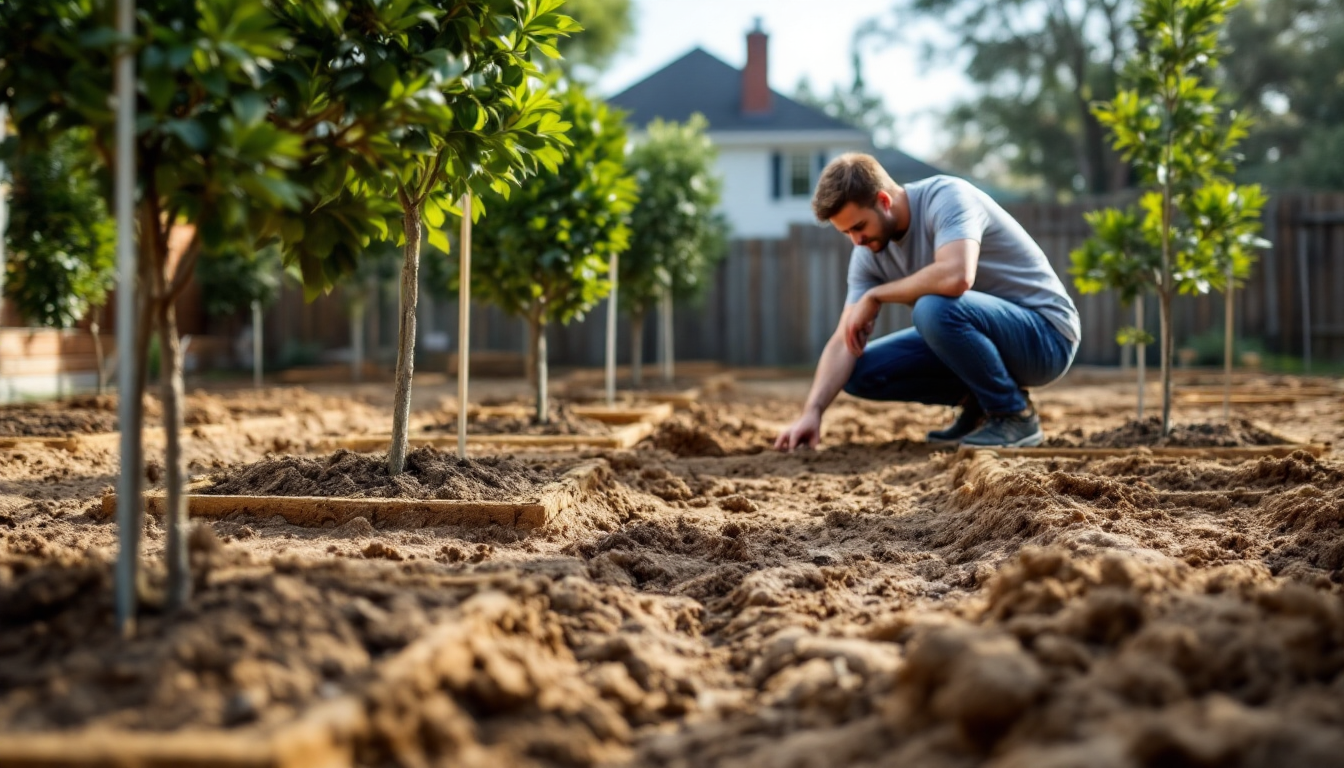
New landscapers often dig a hole, drop in a plant, and backfill with the same compacted, clay-heavy soil that was there before. Poor soil is the quiet reason so many new plantings struggle in year one. Before planting, work compost into beds, break up compacted soil, and check drainage by digging a test hole and filling it with water — if it hasn't drained in a few hours, you likely need to amend or build up rather than plant directly into it.
If drainage or soil quality is genuinely poor, building up rather than digging down is often the easier fix. A raised garden bed lets you control soil quality completely and sidesteps grading problems in one move — a good option for beginners who don't want to fight their native soil.
Mistake #5: Overlooking Scale and Proportion
A patio that's technically "big enough" on paper can still feel cramped once furniture, a grill, and people are added. Beginners frequently underestimate how much space outdoor living actually requires — a rule of thumb is at least 36 inches of walking clearance around any seating area. The same scale problems that trip people up indoors apply outside too; if you're used to thinking about making a small room feel bigger, the same principles of sightlines and proportion carry over to patios and garden rooms.
Mistake #6: Committing to Permanent Hardscape Too Early
Concrete, pavers, and retaining walls are expensive to move. Yet many beginners pour a patio or lay a path before finalizing where beds, trees, or a shed will go. Once hardscape is in, your options shrink dramatically. Use rope, stakes, or even a garden hose to mock up paths and patio footprints for a week before anything is installed — walk the space daily and adjust.
Mistake #7: Designing Without a Real Plan or Visual Reference
Perhaps the most avoidable mistake is skipping a plan altogether and improvising bed by bed. Without a full-yard view, it's easy to end up with a patchwork that doesn't connect — mismatched materials, awkward transitions, plantings that don't relate to the house's style. Sketching the yard to scale, or using simple planning home design software, helps you see how paths, beds, and structures relate before anything is dug.
A Simple Pre-Planting Checklist
- Observed sun, shade, and drainage patterns across the site
- Confirmed grade slopes away from the house
- Checked mature plant sizes and spaced accordingly
- Tested and amended soil where needed
- Mocked up hardscape footprints before installing anything permanent
- Sketched or modeled the whole yard, not just one bed at a time
Avoiding these mistakes won't guarantee a perfect yard on the first try, but it will save you the most common — and most expensive — do-overs. Once the fundamentals are in place, refining plant choices and finishing touches becomes a much easier, lower-stakes process.