7 Ways to Landscape a Sloped Backyard, Compared: Terraces, Berms, Retaining Walls & More
By Marta Nowak, Landscape & Outdoor Designer · July 30, 2026
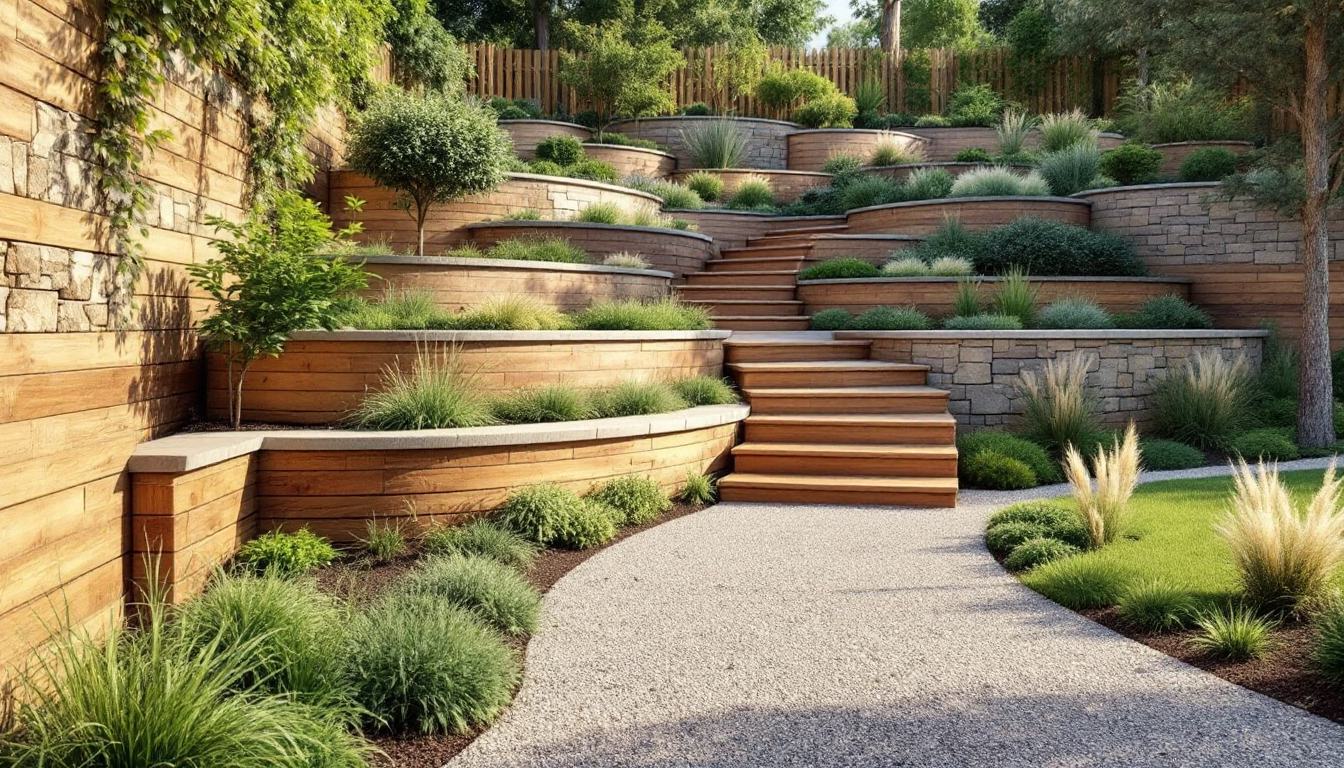
Choosing the right approach for your slope
A sloped backyard isn't a problem to solve so much as a site condition to work with. The right strategy depends on how steep the grade is, how you want to use the space, your budget, and how much soil disturbance you're willing to take on. If you're still getting oriented to the basics, our beginner's guide to landscaping a sloped backyard covers grading fundamentals and drainage first principles. This article picks up where that leaves off, laying out seven distinct methods side by side so you can weigh trade-offs before committing to a plan.
1. Terracing with retaining walls
Terracing turns one long slope into a series of flat steps, each held in place by a retaining wall. It's the most transformative option and the one most likely to make a steep yard genuinely usable for lawn, seating, or garden beds.
- Best for: slopes over 15-20%, yards where you want multiple flat zones (patio, lawn, planting beds)
- Cost: high — materials plus labor for engineered walls, especially over 3-4 feet tall
- Difficulty: often requires a professional or engineer for taller walls and permits
- Trade-off: dramatic results, but excavation and wall construction are disruptive and semi-permanent
2. Timber or block retaining walls (single tier)
Rather than full terracing, a single retaining wall can carve out one flat area — a patio pad or a play space — while leaving the rest of the slope naturalized. Timber walls are cheaper and more DIY-friendly than stone or engineered block, though they have a shorter lifespan.
- Best for: moderate slopes where you only need one level area
- Cost: moderate; timber is the budget option, segmental block and stone cost more
- Difficulty: DIY-feasible under 3 feet with proper drainage gravel and base prep
- Trade-off: requires correct backfill and weep holes or drainage pipe to avoid failure
3. Berms and soil shaping
Instead of cutting into the slope, you can add soil to reshape it — building berms that redirect water, create visual interest, or soften a harsh grade transition. This is a favorite technique for adding topography to an otherwise flat section while easing runoff from a steeper area above it.
- Best for: gentle-to-moderate slopes, yards that need better drainage direction rather than flat terraces
- Cost: low to moderate — mostly soil and grading labor, no structural materials
- Difficulty: DIY-friendly with a rented skid steer or several weekends of hand shaping
- Trade-off: doesn't create true flat, usable space — it's a shaping tool, not a leveling one
4. Rock gardens and erosion-control planting
On slopes too steep or awkward to terrace economically, a layered planting of groundcovers, ornamental grasses, and rock can stabilize soil while looking intentional rather than neglected. Deep-rooted perennials and low shrubs hold soil far better than turf grass on an incline.
- Best for: steep slopes not intended for foot traffic, erosion-prone banks
- Cost: low to moderate, scales with plant density and rock sourcing
- Difficulty: DIY-friendly; the main skill is plant selection for your climate and slope exposure
- Trade-off: requires patience — plantings take a season or two to fully knit the soil together
5. Steps and pathway grading
If the goal is simply getting from the house to the back of the yard safely, a graded path with steps can solve the functional problem without reshaping the whole site. Stone or timber steps set into the slope, paired with a stabilized path surface, are often the most cost-effective single upgrade.
- Best for: connecting levels for walking access rather than creating usable flat zones
- Cost: low to moderate depending on materials (gravel and timber vs. cut stone)
- Difficulty: moderate DIY project; rise-and-run consistency matters for safety
- Trade-off: doesn't address drainage or usable square footage on its own
6. Raised beds on contour
Raised beds built along the contour of a slope act like mini terraces for planting specifically, without the cost of a full retaining wall system. They're especially useful for turning an awkward hillside into a productive vegetable or cutting garden.
- Best for: gardeners who want growing space more than lawn or patio space
- Cost: low to moderate, especially with modular raised-bed kits
- Difficulty: DIY-friendly, similar skill level to standard raised bed building
- Trade-off: solves planting, not entertaining or play space
7. Do nothing (naturalize the slope)
Sometimes the most cost-effective option is leaving the grade alone and simply matching plant choices to the conditions — sun-loving groundcovers up top, moisture-tolerant species at the base where water collects. This works well when the slope isn't in a primary-use area of the yard.
- Best for: slopes at the back or side of a property that aren't part of daily-use space
- Cost: lowest of all options
- Difficulty: low — mainly plant research and seasonal maintenance
- Trade-off: doesn't create new usable space, and won't address a drainage problem if one exists
How to decide
Start by mapping how water currently moves across your yard during a hard rain — that alone will rule out or rule in several options above. If you need genuinely flat, usable space for a patio or lawn, terracing or a single retaining wall is worth the investment. If the goal is simply to stabilize and beautify a slope you won't walk on daily, planting-based solutions cost far less and require no engineering. Many yards end up using a mix: a retaining wall near the house for a patio, berms further out to manage runoff, and erosion-control planting on the steepest remaining bank.
Whichever direction you take, sketching the layout to scale before any digging begins will save you from costly missteps — a tool like the planning resources at Home3DPlan can help you test terrace placement, wall heights, and path routing before committing to a design. And if you're weighing style choices for the finished hardscape and planting beds, it's worth browsing how other exterior projects — like the front yard landscaping styles comparison — approach the same balance of structure, planting, and maintenance, since many of those same principles carry into a backyard slope project.