7 Drought Tolerant Landscaping Approaches Compared: Which One Fits Your Yard?
By Marta Nowak, Landscape & Outdoor Designer · November 15, 2026
Choosing a Drought Tolerant Approach That Actually Fits Your Yard
Once you've decided to reduce water use outdoors, the next question isn't "should I go drought tolerant" — it's "which version of drought tolerant." There isn't one correct formula. A gravel garden in the Southwest behaves differently than a prairie-style meadow in the Midwest or a Mediterranean terrace on the West Coast. If you're still working out the fundamentals, the beginner's guide to water-wise yards covers the basics of soil, zoning, and plant selection. This article goes further, comparing seven distinct approaches so you can weigh trade-offs before committing a weekend — and a budget — to one direction.
1. Gravel and Boulder Gardens
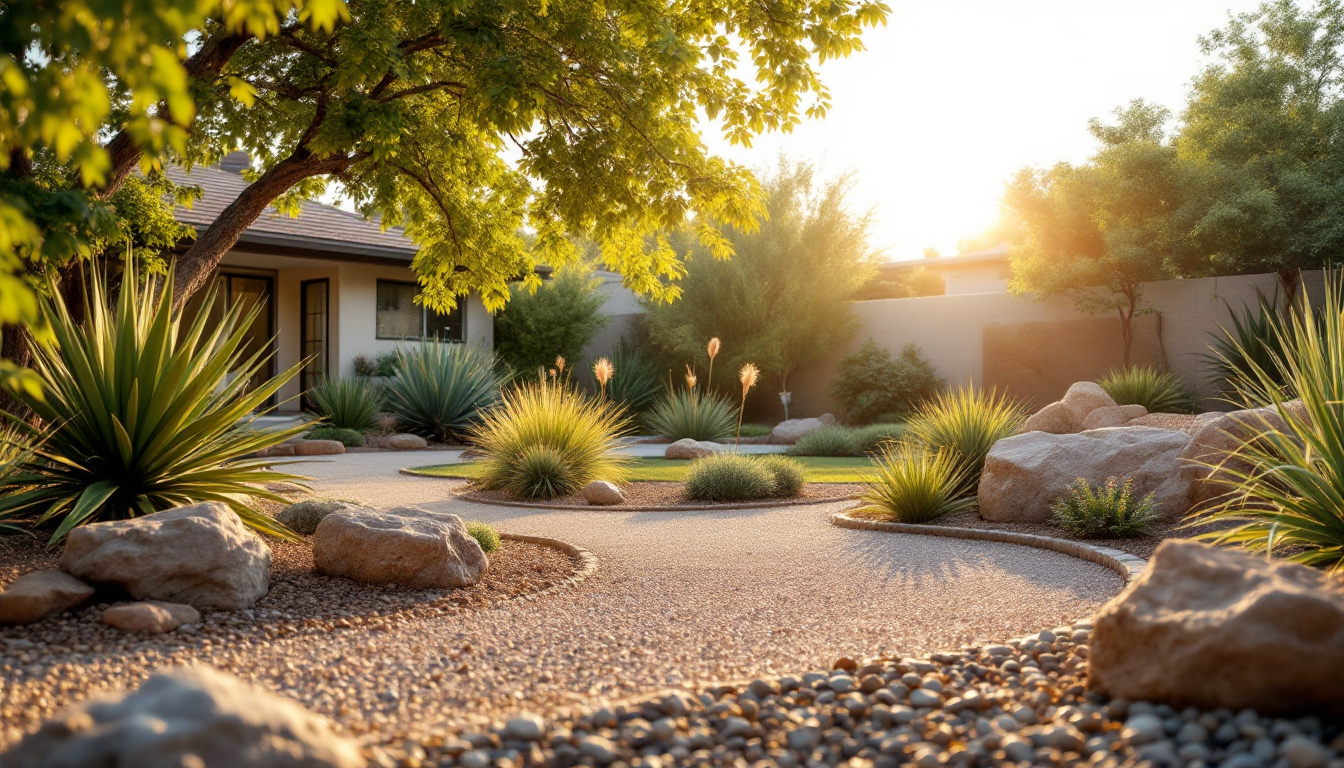
Gravel gardens replace most turf with decomposed granite, crushed rock, or pea gravel, accented with boulders and clustered drought-tolerant perennials. They're low-maintenance once established and shed heat well in arid climates.
- Best for: hot, dry regions with minimal rainfall
- Upfront cost: moderate to high (grading, edging, rock delivery)
- Maintenance: very low, occasional weeding and rock topping
- Drawback: can read as stark without enough plant mass and feel hotter underfoot in summer
2. Mediterranean Terrace Planting
This approach leans on lavender, rosemary, santolina, and olive or citrus trees arranged in structured beds, often with gravel mulch and stone or stucco accents. It suits both formal and relaxed layouts.
- Best for: mild, dry-summer climates (coastal California, parts of the Southwest)
- Upfront cost: moderate, especially if adding hardscape terraces
- Maintenance: low once roots establish, light pruning twice a year
- Drawback: many Mediterranean herbs dislike heavy clay or poor drainage
3. Native Prairie or Meadow Style
Instead of individual specimen plants, this approach sows or plugs in native grasses and wildflowers adapted to local rainfall patterns — think little bluestem, coneflower, or blanket flower depending on region. It mimics a natural ecosystem rather than a manicured bed.
- Best for: larger lots, rural or suburban edges, pollinator-focused homeowners
- Upfront cost: low to moderate (seed mixes are cheaper than mature plants)
- Maintenance: low after year two, but requires patience during establishment and an annual cutback
- Drawback: can look unkempt to neighbors used to tidy lawns; may need a mowed border to signal intention
4. Succulent and Cactus Rock Gardens
Agave, yucca, sedum, and various cacti thrive in sharply draining soil and need almost no supplemental water once established. This style pairs well with modern architecture and minimal color palettes.
- Best for: desert and high-heat zones, small courtyards, container-heavy patios
- Upfront cost: moderate, since mature succulents cost more than seed-grown perennials
- Maintenance: minimal watering, but spiny plants need careful placement away from walkways
- Drawback: limited cold tolerance in many species; winter protection may be needed outside mild zones
5. Berm-and-Swale Water Harvesting
Rather than fighting water scarcity with plant choice alone, this approach reshapes the ground. Low berms and shallow swales direct rainfall toward planting zones instead of letting it run off, reducing the need for irrigation even in dry spells. It's a favorite technique for anyone grading a yard from scratch, since the earthwork can be planned alongside a site plan for permitting if the grading affects drainage on a shared lot line.
- Best for: sloped yards, regions with occasional heavy rain between dry spells
- Upfront cost: moderate, mostly labor and soil movement
- Maintenance: low, though berms need stabilizing plants to prevent erosion
- Drawback: requires more design precision; poorly placed swales can pool water near foundations
6. Raised Bed Xeriscaping
Raised beds filled with well-draining soil let you control moisture retention precisely, which is useful on sites with heavy clay or poor native soil. Combine them with drip irrigation on a timer and drought-tolerant edibles like rosemary, thyme, or dwarf fruit trees.
- Best for: small or urban yards, anyone wanting edible plants alongside ornamentals
- Upfront cost: moderate to high (lumber or masonry, soil fill)
- Maintenance: low to moderate, beds dry out faster than in-ground plantings so drip lines matter
- Drawback: higher initial investment per square foot than open-ground beds
7. Hybrid Lawn Alternative
For households not ready to give up all green space, clover, buffalo grass, or other low-water turf substitutes offer a compromise. They need far less irrigation than traditional fescue or bluegrass while still providing a walkable surface for kids or pets.
- Best for: families wanting usable lawn with reduced water bills
- Upfront cost: low to moderate, often just reseeding or sod replacement
- Maintenance: moderate, less mowing than standard turf but still needs occasional care
- Drawback: doesn't achieve the dramatic water savings of fully xeric designs
Comparing the Trade-Offs
If minimal upkeep is the priority, gravel gardens and succulent beds win. If you want ecological value and don't mind a looser look, native meadow planting is hard to beat. Berm-and-swale shaping is the best long-term investment for anyone who gets occasional downpours, since it banks water instead of letting it disappear into the storm drain. And if you're not ready to commit fully, a hybrid lawn alternative is the lowest-friction starting point.
Whichever direction you lean, it helps to visualize the layout before digging. Sketching bed shapes, berm contours, and hardscape zones on a home and yard planning platform lets you test proportions and plant groupings without moving a single shovelful of soil first.
Final Thought
Drought tolerant landscaping isn't a single recipe — it's a spectrum of techniques that can be mixed to match your climate, soil, and how much structure versus wildness you want in the yard. Start with the approach that solves your biggest pain point, whether that's a water bill, a slope that erodes, or a lawn that browns out every July, and layer in others as the space matures.