7 Best Woods for Furniture Making, Compared: Strength, Cost, and Workability
By Niklas Ekstrand, Furniture & Maker Editor · September 12, 2026
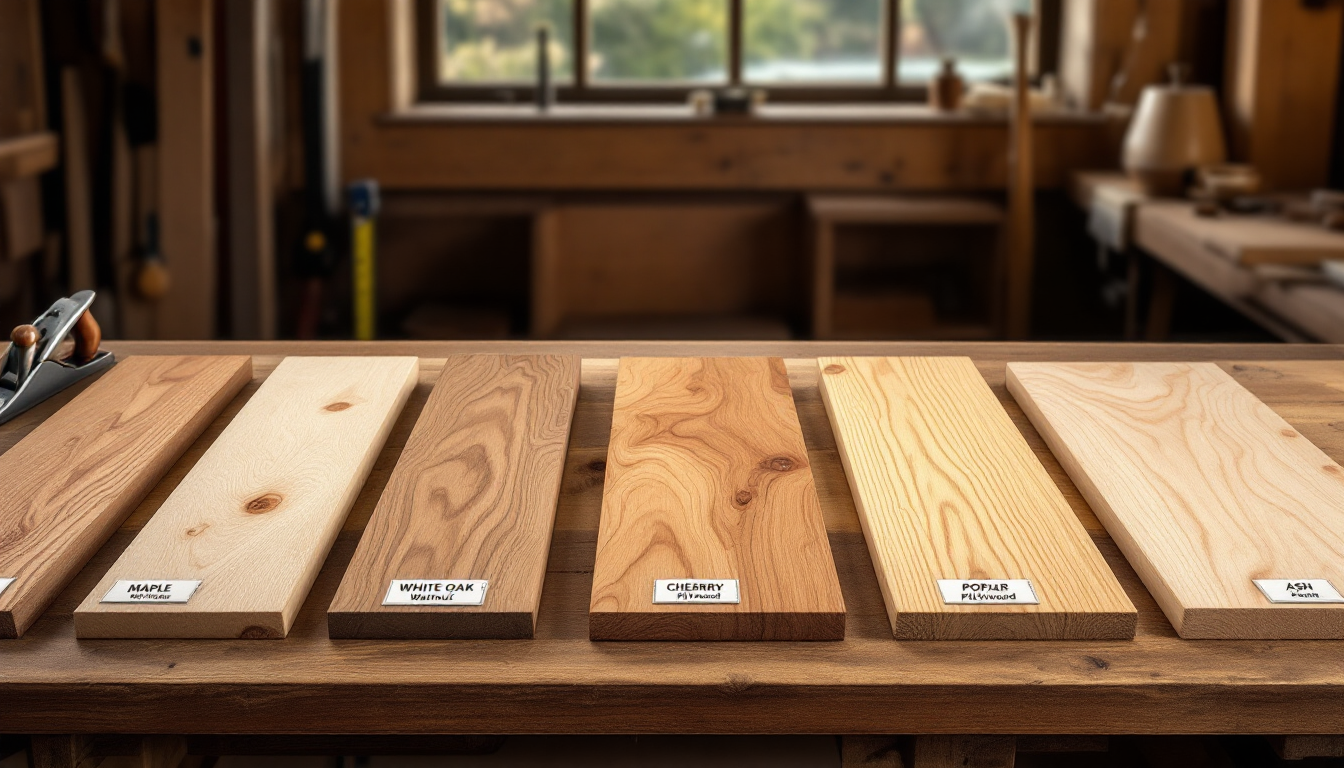
Choosing the right species for the job, not just "good wood"
There's no single "best wood for furniture making" — there's the best wood for this project, this tool set, and this budget. A dining table that needs to survive decades of dinners has different requirements than a jewelry box or a set of shop cabinets. This guide compares seven commonly used species head-to-head across the factors that actually matter at the bench: hardness, stability, workability, cost, and how they take a finish. If you want the fundamentals first — grain, moisture content, hardwood vs. softwood — start with our beginner's guide to choosing the right species, then come back here to weigh your specific options.
The comparison at a glance
- Hard maple: extremely durable, tight grain, tough on tools, takes stain unevenly without a conditioner.
- White oak: strong, rot-resistant, classic open grain, moderate cost, workhorse for tables and cabinets.
- Walnut: premium look, stable, machines beautifully, higher price per board foot.
- Cherry: forgiving to work, ambers with age, moderate hardness, excellent for hand-cut joinery.
- Poplar: inexpensive, easy to mill, best painted rather than left natural.
- Baltic birch plywood: dimensionally stable, ideal for cabinet carcasses and CNC parts, not solid lumber.
- Ash: flexible strength, pronounced grain, good shock resistance for chairs and tool handles.
1. Hard maple: the workhorse for durability
Hard maple sits near the top of the Janka hardness scale among common furniture woods, which makes it excellent for cutting boards, workbenches, and furniture that takes daily abuse — chairs, tables, dressers. Its tight, closed grain gives a smooth, almost glassy surface when finished. The trade-off: it's hard on hand tools and blunts router bits faster than softer species. Staining is also tricky, since maple can blotch; a pre-stain conditioner or a gel stain is worth the extra step. Cost is moderate, generally cheaper than walnut but pricier than poplar.
2. White oak: the classic all-rounder
White oak has been a furniture staple for centuries because it balances strength, availability, and a look that reads as "quality" without trying. Its closed cell structure makes it more moisture- and rot-resistant than red oak, so it's a common choice for outdoor-adjacent pieces and kitchen furniture. The open, ray-fleck grain is distinctive and takes both oil and stain well. It's a reasonable pick if you're building your first larger project — pair it with the joinery techniques in our beginner's guide to cutting a mortise and tenon joint for strong, traditional table and chair frames.
3. Walnut: the premium choice
Walnut is the wood most people picture when they think "furniture-grade." Its rich chocolate-brown heartwood, fine grain, and excellent stability under seasonal humidity swings make it a favorite for tables, headboards, and case pieces meant to be heirlooms. It machines cleanly, sands to a smooth finish, and rarely needs stain — a simple oil or wipe-on finish lets the color speak for itself. The catch is price: walnut typically runs two to three times the cost of oak or maple, so it's best reserved for feature pieces rather than full builds on a tight budget.
4. Cherry: the hand-tool favorite
Cherry is softer and more forgiving than maple or oak, which makes it a pleasure to work with hand planes and chisels — a real advantage if you're building joinery by hand rather than relying on power tools. Freshly cut cherry is pale pink but darkens to a warm reddish-brown over months of light exposure, so many woodworkers finish it and let it age naturally rather than trying to match a sample board. It's a strong option for smaller case pieces, boxes, and furniture where hand-cut dovetails or mortises are part of the design.
5. Poplar: the budget workhorse
Poplar is inexpensive, straight-grained, and easy to mill, which makes it popular for painted furniture, drawer boxes, and practice pieces while you're still building skills. Its color — streaks of green, gray, and cream — looks inconsistent under a clear finish, so it's rarely left natural. If you're just getting started and want to build confidence before committing to pricier lumber, poplar is a sensible testing ground; see our step-by-step guide to building furniture as a beginner for a project sequence that works well with softer, cheaper stock first.
6. Baltic birch plywood: the sheet-goods specialist
Solid lumber isn't always the right answer. For cabinet carcasses, drawer boxes, and parts destined for a CNC router, Baltic birch plywood offers dimensional stability that solid wood can't match — no seasonal expansion or contraction to fight. Its void-free core also machines cleanly, which matters if you're cutting parts from a digital file rather than a hand-drawn plan. If your workflow starts on a screen before it reaches the shop, it's worth reviewing how a design moves from a flat layout to a cuttable model, similar to the process described in our guide on turning a 2D plan into a 3D model — the same "digital-first" logic applies to a parametric cut sheet.
7. Ash: the flexible, shock-resistant option
Ash is less common in furniture showrooms but well worth considering for chairs, benches, and anything subject to repeated stress or impact — its long, straight grain gives it excellent shock absorption, which is why it's traditionally used for tool handles and sports equipment. It has a pale color and a bold, open grain similar to oak, and it accepts stain and finish readily. Availability varies by region, so check local suppliers before designing a piece around it.
How to decide
Match the wood to the piece, not the other way around: durability-first projects favor maple or oak, showpiece furniture favors walnut or cherry, and budget builds or painted pieces favor poplar. Sheet goods like Baltic birch plywood belong in the conversation whenever you're building carcasses or working from a digital cut file. Whatever you choose, model the piece before you touch a board — planning joinery, panel sizes, and grain orientation in advance on a platform like Home3DPlan saves lumber and prevents costly mistakes once the saw is running.