Front Yard Landscaping Ideas for Beginners: A Step-by-Step Guide
By Marta Nowak, Landscape & Outdoor Designer · July 13, 2026
Why Front Yard Landscaping Deserves a Real Plan
The front yard is the first thing visitors, neighbors, and even you see every day. Yet it's often the most neglected part of a property, treated as an afterthought once the lawn is mowed. If you're new to landscaping, the good news is that a great front yard doesn't require a professional crew or an unlimited budget — it requires a plan. This guide walks you through the basics step by step, so you can approach your yard with confidence instead of guesswork.
Step 1: Study Your Site Before You Shop for Plants
Before buying a single shrub, spend a week observing your yard. Note which areas get full sun, partial shade, or deep shade throughout the day. Check how water drains after rain — puddles that linger for hours signal poor drainage that needs addressing with grading or a dry creek bed. Look at your soil too; a simple squeeze test (does it clump or crumble?) tells you whether you're working with clay, sand, or loam.
This assessment phase is the single most important step in landscaping, and it's the one beginners skip most often. Skipping it leads to dead plants and wasted money later.
Step 2: Define Zones, Not Just Decorations
Think of your front yard as a series of functional zones rather than a blank canvas for decoration. Common zones include:
- The approach path — the walkway guiding people from the driveway or sidewalk to your front door
- The foundation planting bed — the border of shrubs and flowers along the house
- The lawn or ground cover area — open space that frames everything else
- Accent zones — a mailbox garden, a tree island, or a seating nook
Sketching these zones on graph paper (or using a digital layout tool) before you dig helps you avoid the common beginner mistake of placing plants randomly and ending up with a cluttered, unbalanced look. If you want to visualize how different layouts might work on your actual lot, tools like home3dplan.com's planning resources can help you map ideas before committing to physical changes.
Step 3: Choose a Simple Design Style
Beginners often try to mix too many styles at once. Instead, pick one guiding aesthetic and let it inform your plant and material choices:
- Cottage style — layered perennials, curved beds, informal plantings
- Modern minimalist — clean lines, ornamental grasses, gravel, and a limited plant palette
- Traditional formal — symmetrical hedges, structured beds, classic proportions
- Low-maintenance native — regional plants suited to your climate that need minimal watering
Choosing one style early prevents the scattered look that happens when every plant is bought on impulse.
Step 4: Layer Your Planting Like a Garden Bed, Not a Row
A common beginner mistake is planting everything in a single straight line along the house. Instead, think in layers:
- Back layer: taller shrubs or small trees near the foundation
- Middle layer: medium perennials and flowering shrubs
- Front layer: low ground covers, edging plants, or seasonal color
This layered approach mimics how plants grow in nature and creates depth even in a small space. It also makes maintenance easier because you can access each layer without stepping on another.
Step 5: Add Structure with Hardscaping
Plants alone won't carry a front yard — hardscaping gives it bones. Even a beginner project can include:
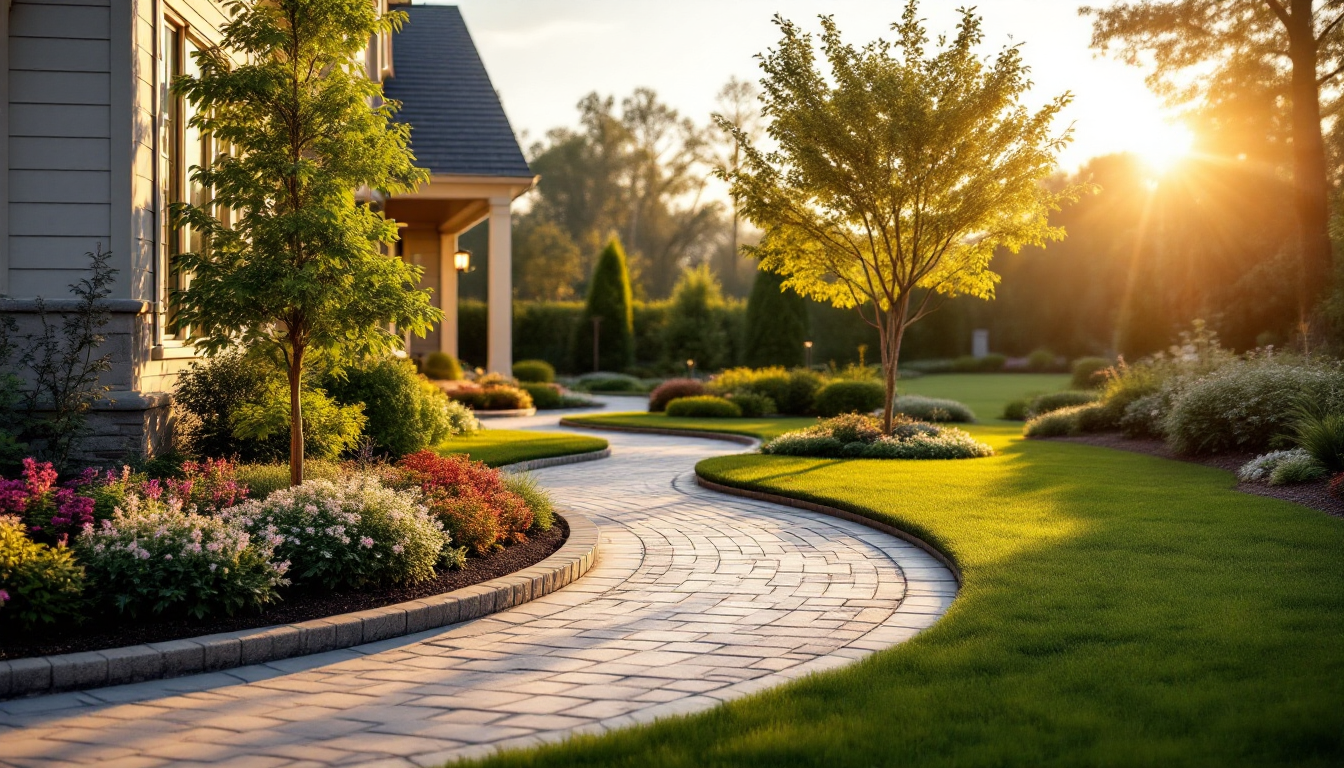
- A defined path using pavers, brick, or gravel
- A low retaining wall or raised bed edge to separate zones
- A small berm — a gentle mound of soil — to add elevation interest and improve drainage on a flat lot
- Simple edging material to keep mulch and lawn from blending together
Hardscaping doesn't need to be elaborate. A single well-placed path or edged bed can transform a yard's perceived structure more than adding a dozen new plants.
Step 6: Think About Light and Evening Appeal
Many first-time landscapers forget that a front yard is seen after dark just as often as during the day. Low-voltage path lights, an uplight on a specimen tree, or a soft glow near the entry door add safety and curb appeal without a major investment. Start with two or three fixtures rather than lighting every corner — restraint usually looks more intentional than excess.
Step 7: Plan for Maintenance From Day One
Before finalizing your plant list, ask honestly how much time you want to spend on upkeep. Native and drought-tolerant species generally need less watering and pruning than exotic ornamentals. Grouping plants with similar water needs — a practice called hydrozoning — also saves time and reduces waste. A front yard that looks good in year one but becomes unmanageable by year three isn't a successful design.
Common Beginner Mistakes to Avoid
- Buying plants before measuring the space or checking sun exposure
- Ignoring mature plant size, leading to overcrowding within a few seasons
- Skipping soil preparation, which affects nearly everything planted afterward
- Overcomplicating the design with too many colors, textures, or materials at once
Bringing It All Together
Good front yard landscaping is less about following trends and more about understanding your specific site, working in deliberate zones, and layering plants and materials with a clear purpose. Start small: improve one zone this season, then expand next year as you learn what thrives in your soil and light conditions. If you want to explore layout options digitally before breaking ground, the planning tools at home3dplan.com can help you test ideas risk-free. With a thoughtful plan, even a first-time landscaper can create a front yard that feels welcoming, structured, and easy to maintain for years to come.